Blog · Tournament day
Finding Your Ring at an ATA Tournament
How ATA rings are formed in 2026-27, why all eight events run in one ring, when to arrive, and exactly when it's too late to be added.
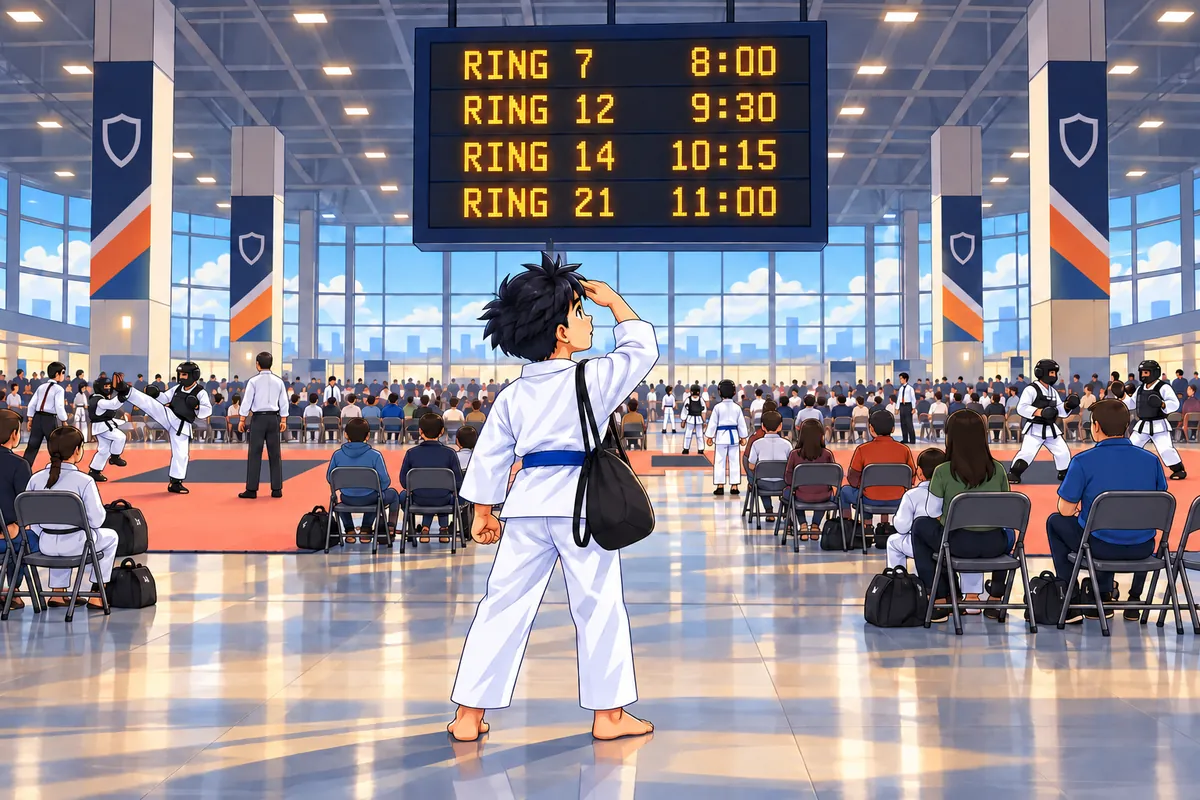
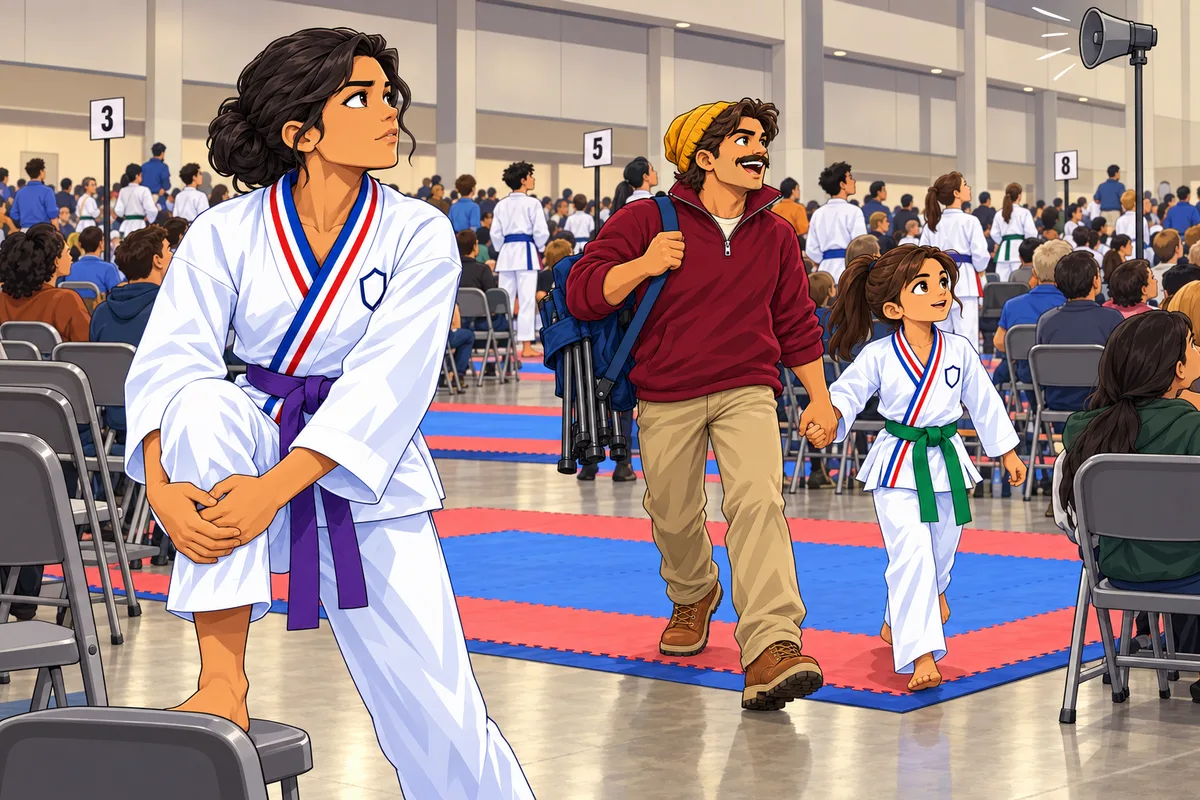
A voice on the loudspeaker reads out two full names. Half the room looks up. One parent starts walking fast, because one of those names lives in their house.
Ring assignments are more predictable than that moment makes them feel. Every athlete is assigned one numbered ring, and all eight Traditional, Creative and Xtreme events take place there in a set order. The ring itself is built on the day, from the competitors who check in.
Everything below comes from the 2026-27 ATA tournament rules.
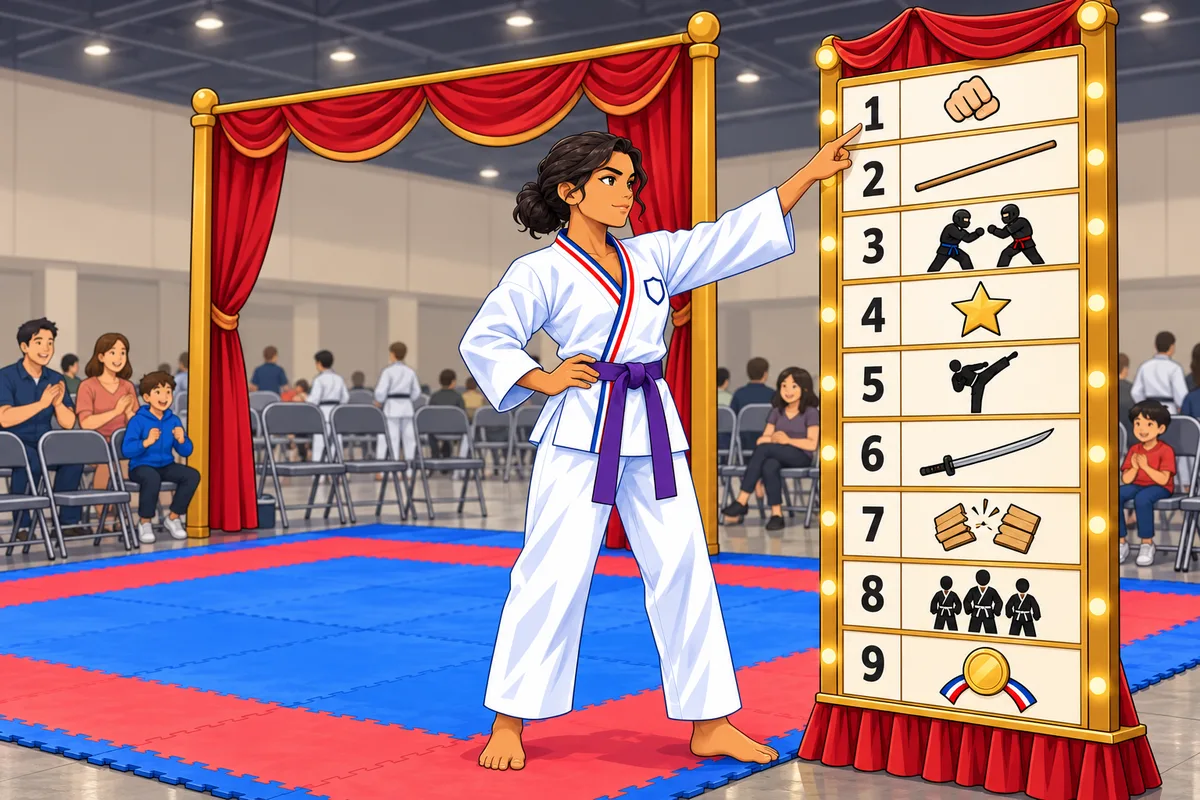
Think of the ring as a stage. Each stage has one printed running order, and its eight acts go on in turn. Once an act is over, the curtain stays down.
The ring is built from who shows up
Divisions are put together by the Regional Tournament Team Leader (the RTTL) or by whoever they assign. Rings can be set in advance from the ataezsignup.com registrations, and the RTTL can still adjust them once they see who is in the building.
- Twelve is the aim, sixteen is the ceiling. The RTTL may put more than 12 competitors in a division when the event needs it, but will never go over 16.
- A ring only splits at 13. Twelve or fewer stay together, whatever their height or size.
- Once a ring is on the floor, it stays as it is. If a ring of 12 has already been sent out and one more competitor arrives, that competitor is simply added. The ring isn't reset, and it isn't re-split.
- Nobody gets to ask for a different ring. No competitor, parent, senior or spectator should try to influence how the RTTL forms divisions, and that includes asking for a change to fit a travel schedule.
Color belt ages and ranks are often called together, white through red. That call isn't the division. The RTTL sorts everyone into divisions after it, so nobody knows their ring until then.
All eight events run on one stage
Here is the worry that keeps families up the night before: what if forms is called in one ring while Creative and Xtreme start in another? At a regional event the schedule itself answers most of it.
The order of competition at regional, national and world events is fixed:
- Traditional forms
- Traditional weapons
- Combat weapons sparring
- Traditional point sparring
- Creative forms
- Creative weapons
- Xtreme forms
- Xtreme weapons
If a ring runs Traditional one-steps, they come between Traditional weapons and combat weapons sparring.
At sanctioned regional events, the ATA Creative and ATA Xtreme events follow the Traditional events immediately, in the same ring. Traditional awards are handed out at the end of Traditional point sparring, and anyone not staying for Creative or Xtreme is dismissed then. Competitors who are staying get five minutes to change uniforms. That happens in a restroom or locker room, never at ringside.
The exception is the big events. At National and World tournaments the Creative and Xtreme schedule is posted before registration opens, and those events may fall on a different day from the Traditional ones.
Arrive before the act, not during it
Competitors are called to a staging area, which is usually away from the main competition floor. Some tournaments use a particular ring for it instead.
- Color belts. Where approximate competition times are posted, arrive at the venue 30 to 45 minutes before the posted time, unless the tournament packet says otherwise.
- Black belts aged 15 and older. Arrive in time for the black belt meeting, which is held before opening ceremonies.
- Everyone. The recommendation is to be on the main floor in time to line up and bow in before competition starts.
At a regional event there's no ring sheet to check. Divisions are called by age and belt rank, and the ring number is announced as competitors are taken to their ring. Listen for your athlete's age and rank, and stay close enough to hear the number. Full names come over the loudspeaker only when a competitor is running late. Nationals work differently, because ring assignments are set before the tournament date.
What no app or schedule can give you is the exact minute. Posted times are approximate and rings run at their own pace. TKD Companion is no different: it records what happened in a ring, but it doesn't announce when one starts.
Late has a cut-off, and it keeps moving
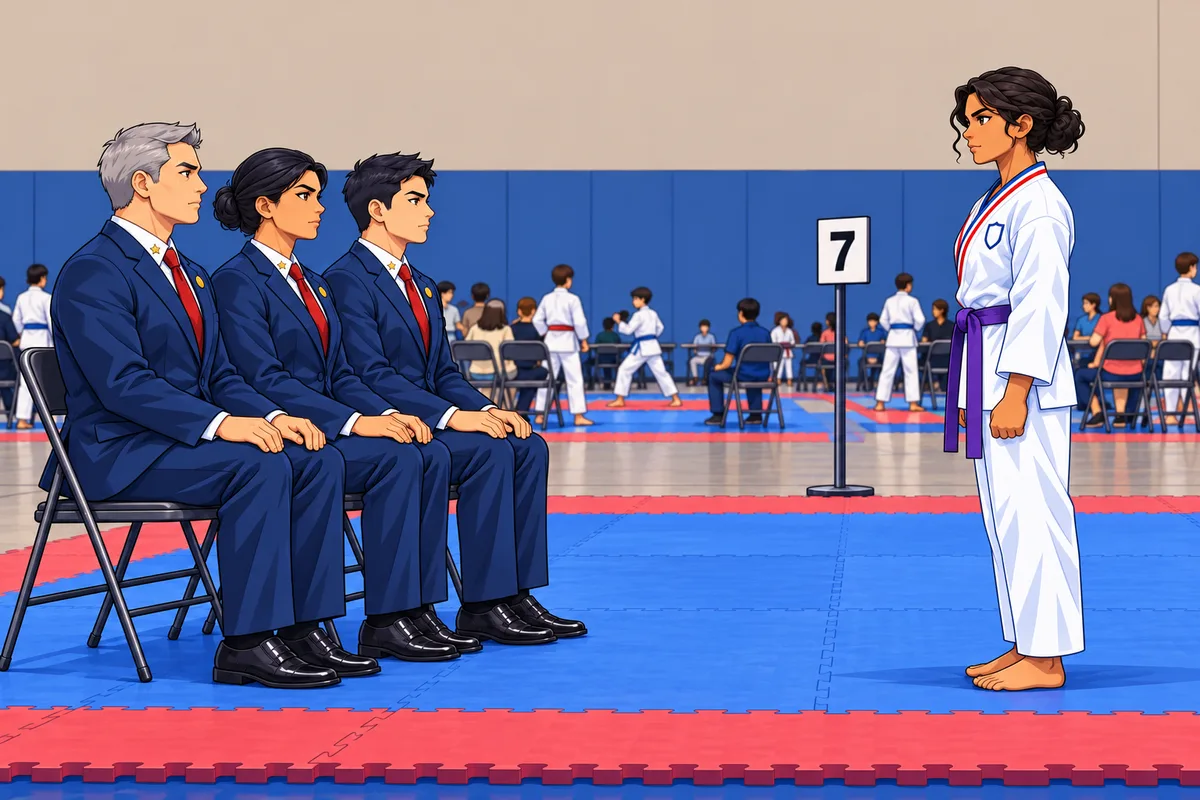
Running late isn't automatically the end of the day. For a genuine unforeseen reason, the center judge can let you into the division, as long as the RTTL approves it and comes to the ring to oversee it.
The catch is that each act closes behind you.
- Traditional forms closes when the tie runoffs begin, or, if there are no ties, when the first weapons competitor is called up.
- Traditional weapons closes when its tie runoffs begin, or when the first one-step match starts, or the first combat weapons match in a ring with no one-steps.
- One-steps, combat weapons and point sparring close once the first round has started with no byes left. The bracket isn't rewritten to make room.
If you're added late, you're called up next, wherever your name lands on the scoresheet, with no extra time to warm up or stretch.
If the ring has already finished, the RTTL may create another ring so a junior competitor can still compete for a medal. Those rings earn no State or World Top Ten points, with one exception: if the RTTL decides their own staff caused the miss, and ATA National staff confirm it, the competitor receives full first-place points.
Arriving late on purpose backfires. If the RTTL believes a competitor arrived late on purpose, they can refuse entry to any competition that day.
After the ring, the results get quiet
The ring finishes, the medals go out, and the paperwork goes back to the control table. Then comes the part nobody warns you about: finding that result again on Wednesday.
ATA standings sit behind a MyATA login on atamartialarts.com. There's no public page where you type an athlete's name and read Saturday's placements, so the most reliable record of the day is the one the family writes down at the ring.
That's the gap TKD Companion fills. It records scores, placements and match video at the ring and keeps them for each athlete and season, so the day is written down while it's still happening. If a placement later goes missing from the official standings, what to do about missing ATA points walks through the fix.
Quick answers
How many competitors are in an ATA ring?
Twelve is the recommended maximum and 16 is the hard ceiling. A ring isn't split unless there are 13 or more competitors in it.
Can two of my events run at the same time in different rings?
Not for the eight Traditional, Creative and Xtreme events at a regional tournament. They all run in one ring, in order. At National and World events the Creative and Xtreme schedule is published before registration opens and may be on a separate day.
What happens if we arrive after our ring has started?
The center judge can insert the competitor with the RTTL's approval, as long as that event hasn't closed. Forms closes when weapons begins, weapons closes when the first one-step or combat match begins, and the bracket events close once the first round starts with no byes left.
Can I ask for my ring to be moved?
No. Nobody should try to influence how the RTTL forms divisions, and that includes asking for a change to suit travel plans.
Listen for the age and rank, catch the ring number, and know the running order. Then the only names you hear over the loudspeaker will be someone else's.